What is a nurture room, and how does it help?
What a nurture room is, where the idea comes from and how it can help a young child with additional needs, plus a look inside our three nurture rooms.
If you have been looking at nurseries for a child with additional needs, you have probably come across the phrase nurture room. Some settings have one, some have several, and the name is not used in exactly the same way everywhere. That makes it hard to know what you are actually comparing when you visit.
This guide explains where the idea of nurture comes from, what a nurture room usually means in a nursery, and what our three nurture rooms at Busy Bugs in Shelton look like day to day. It is general information for parents, not advice about any individual child.
Where the idea of nurture comes from
The word comes from schools. Education Scotland records that in the 1970s the educational psychologist Marjorie Boxall developed nurture groups in London, and that the Warnock Committee endorsed them in 1978. According to Nurture UK, the charity that supports nurture practice, nurture groups have now run in the UK for over 50 years.
Nurture UK describes a nurture group as a focused, short-term intervention for primary or secondary school pupils with social, emotional and behavioural difficulties. A group is typically run by two members of staff with up to twelve pupils, with a particular emphasis on language and communication, and pupils usually move back into their mainstream class afterwards.
The thinking behind it is set out in Nurture UK's six principles of nurture:
- Children's learning is understood developmentally
- The classroom offers a safe base
- The importance of nurture for the development of wellbeing
- Language is a vital means of communication
- All behaviour is communication
- The importance of transitions in children's lives
How a nursery nurture room differs from a school nurture group
A nursery is not a school, and a nurture room in an early years setting is not the same thing as a school nurture group, even where it borrows the same ideas. Nurture UK's description is written for school pupils. In nurseries, the name tends to be used more loosely, so the most useful thing you can do on a visit is ask what the setting means by it.
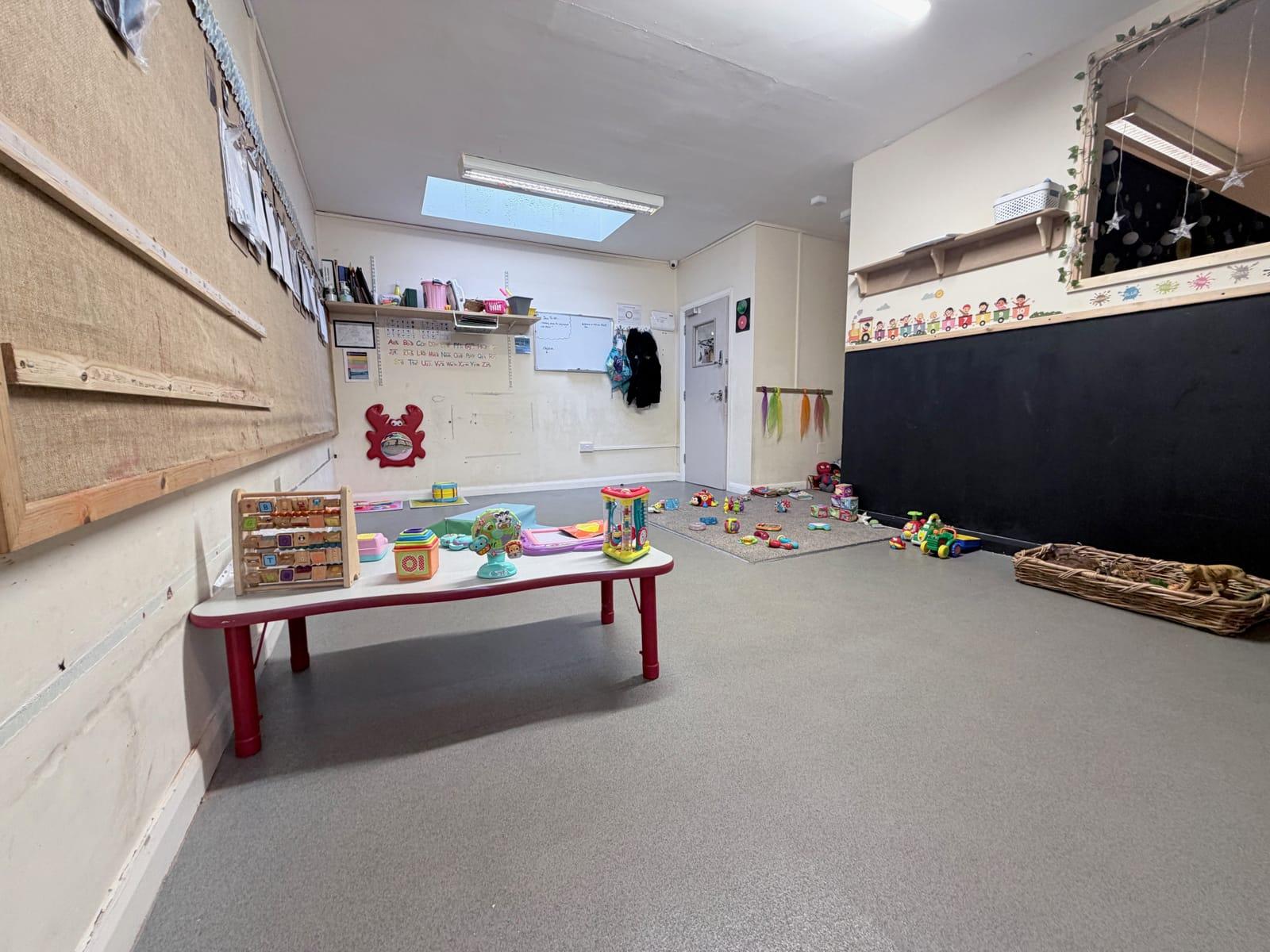
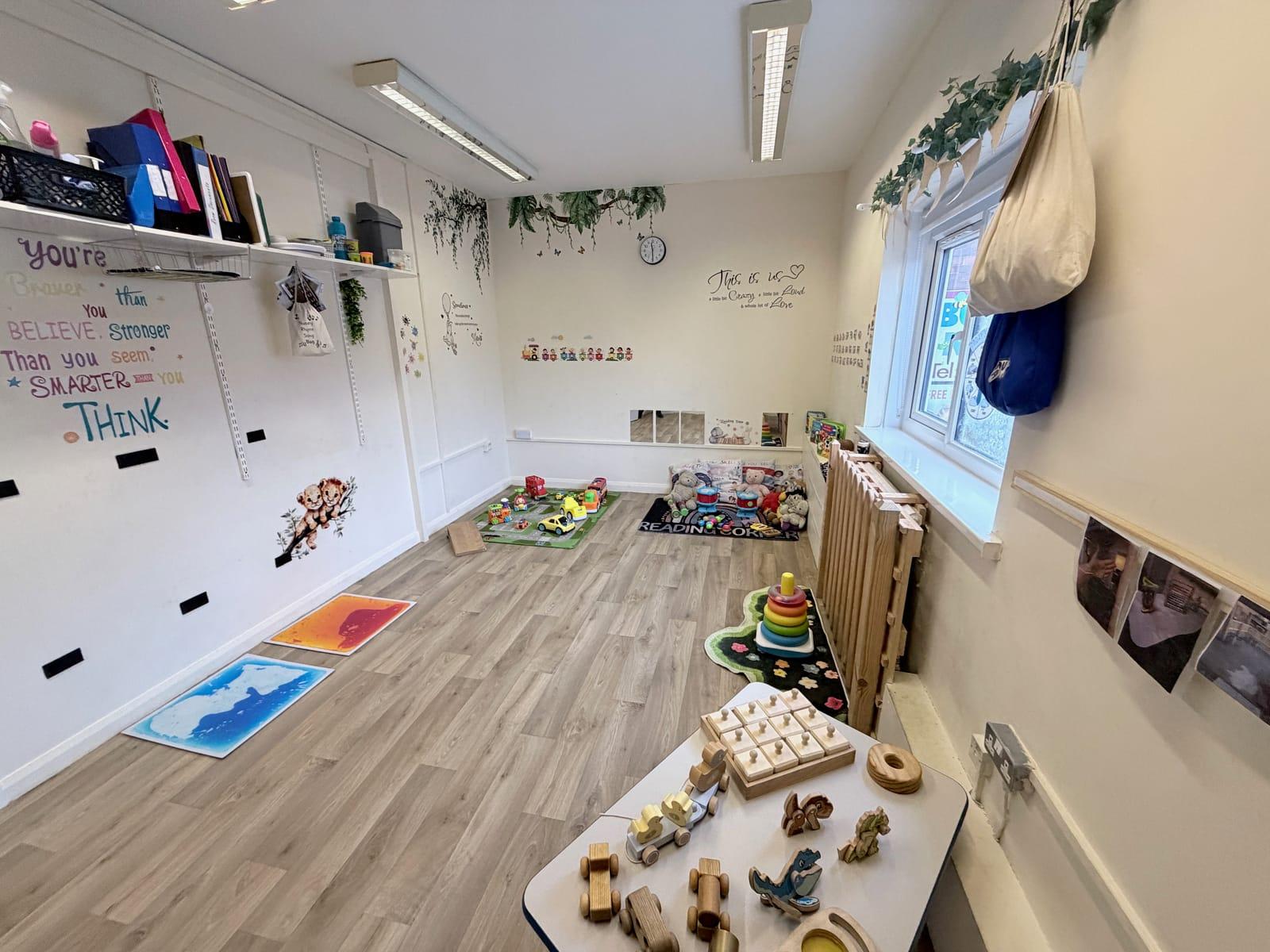
At Busy Bugs, a nurture room is a dedicated room for children with additional needs. Compared with a mainstream room, it has a smaller group, more adults, and a calmer, more structured environment. We meet the legal ratio requirements in our mainstream rooms, and in our nurture rooms we have additional staff, so every child gets proper attention.
When we redesigned the nursery, we moved away from large, overwhelming spaces to seven smaller rooms, and three of those are our SEN nurture rooms. Between them, we have space for up to 30 children with additional needs.
What our three nurture rooms offer
Each of our nurture rooms provides a different level of support, so a child can be placed where the support fits.
Nurture Room 1 caters for up to 12 children, staffed by five experienced practitioners including a qualified SENCO, with a staff-to-child ratio of at least 1:3. The room is calm, structured and free from unnecessary distractions. The day includes Attention Bucket sessions, focused table-top activities, communication and interaction work, and targeted interventions for independence and attention. Our aim here is to prepare children for the next stage of their education, including securing an Education, Health and Care Plan (EHCP) where one is needed.
Nurture Room 2 is a specialist room for up to nine children, with a ratio of between 1:2 and 1:3. Support is individual to each child, with personalised learning targets, an adapted curriculum, behaviour regulation strategies, social skills development, and speech and language support where appropriate.
Nurture Room 3 is for up to nine children, with two members of staff, one of whom holds at least a Level 3 qualification. Its focus is school readiness, with the long-term goal that, with the right support in place, children can move on successfully to a mainstream school.
How a nurture room can help a young child
A nurture room does not change who a child is, and it is not a treatment. What it can change is the environment around them, which for many young children with additional needs is a big part of what makes a day manageable.
A smaller group means fewer people, less noise and fewer things competing for a child's attention. More adults means each child gets consistent, personalised support from people who know them well. In our nurture rooms, that enhanced ratio is also what lets us deliver the targets and strategies set by external professionals and outside agencies day after day, rather than once in a while.
Structure helps too. A predictable routine in a calm room can help a child feel secure, and a child who feels secure is in a far better position to focus and learn. That fits closely with two of the nurture principles above: that all behaviour is communication, and that transitions matter. Much of the work in a nurture room is noticing what a child's behaviour is telling us, and preparing them carefully for each change, from the next activity to the move up to school.
Every child is different, and a nurture room will suit some children better than others. That is a conversation worth having with the setting, and with any professionals already involved in your child's care.
The sensory room and the Nurture Garden
Children in our nurture rooms also have access to our dedicated sensory room, one to one or in small groups depending on each child's needs. It is a calm, structured space designed to help children regulate their feelings, calm their bodies and refocus their attention, so they feel settled and able to engage with their day. We have written more about sensory play at nursery.
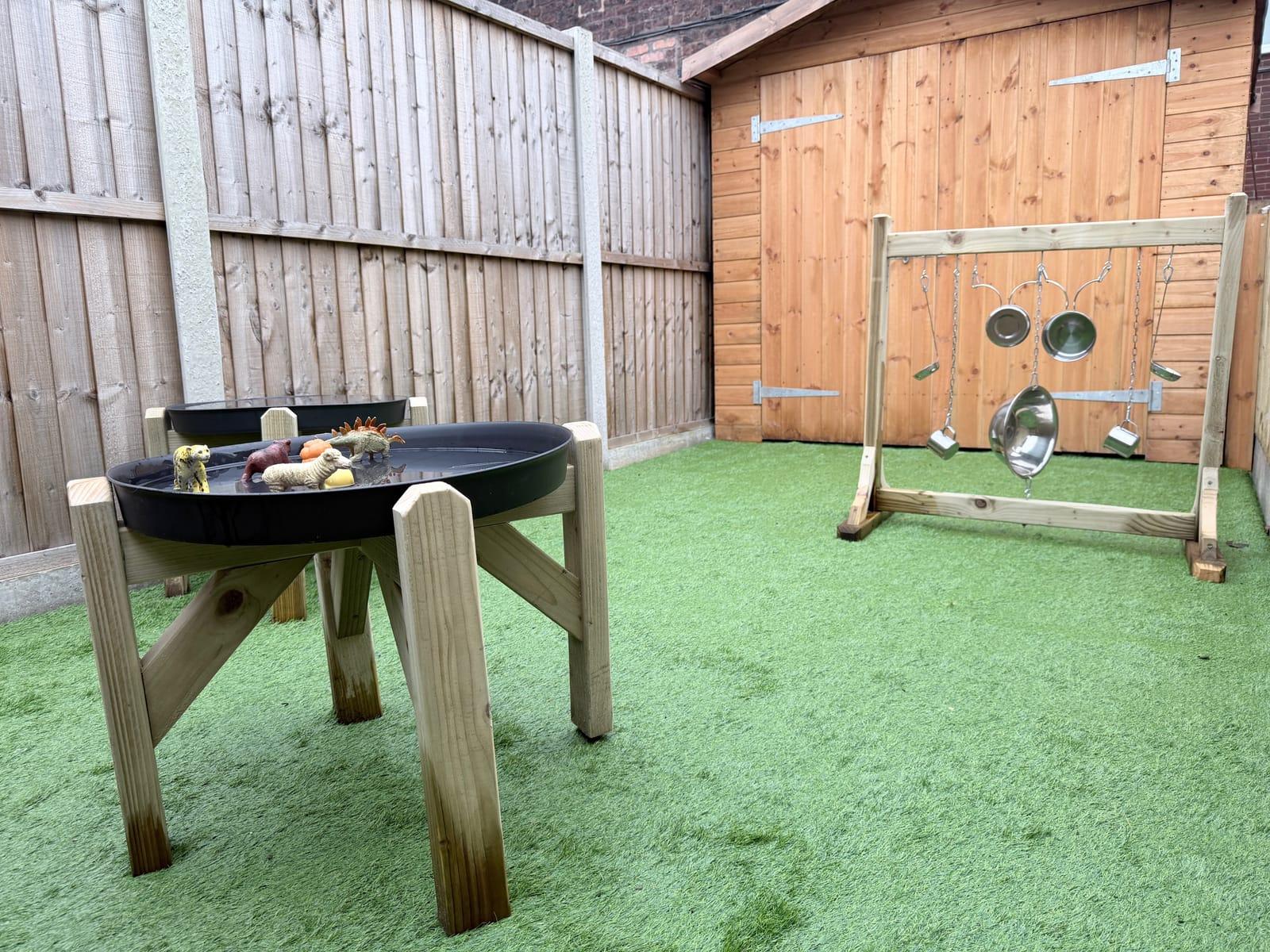
Outside, the Nurture Garden is a safe, secure outdoor space for children in the nurture rooms, with a sensory wall, a play kitchen, a play house and open-ended resources to explore.
Working with families and outside professionals
A nurture room works best when it is joined up with everything else around the child. We have two qualified SENCOs and a dedicated SEN family support officer, and our SEN Lead coordinates referrals to outside agencies, always with parental consent. We work with families to create individual support plans, and all of our staff have completed Dingley's Promise training.
You do not need a formal diagnosis for us to support your child. Our SEN staff observe and identify needs early, and we support your child while any assessments are underway. If an EHCP is likely, our guide to SEN Support and EHCPs explains how the process works.
Questions to ask about a nursery's nurture room
Because the term is used in different ways, it is worth asking the same questions at every setting you visit:
- How many children are in the room, and how many adults?
- What qualifications and SEN training do the staff in that room have?
- How is the day structured, and what happens when a child is overwhelmed?
- Is there a sensory room or quiet space, and how do children use it?
- How does the setting work with outside professionals and with you?
- How does the room help children prepare for the move to school?
Our guide to SEN-trained nursery staff goes into the staffing questions in more detail, and settling into nursery with additional needs covers the first few weeks.
Visiting our nurture rooms in Stoke-on-Trent
The best way to understand a nurture room is to stand in one. You are welcome to call us on 01782 287 959 or just pop in, with no appointment needed. We are at Bedford House, Havelock Place, Stoke-on-Trent, ST1 4PR. You can see all of our rooms online first, or get in touch and we will show you round.
Frequently asked questions
What is a nurture room at a nursery?
It is a dedicated room for children with additional needs, with a smaller group, more adults and a calmer, more structured environment than a mainstream room. The idea borrows from nurture groups in schools, but the term is used in different ways from setting to setting, so it is worth asking each nursery what it means by it.
Does my child need a diagnosis to use a nurture room at Busy Bugs?
No. You do not need a formal diagnosis. Our SEN staff observe and identify needs early, make referrals to outside agencies with your consent, and support your child while any assessments are underway.
How many children are in each nurture room at Busy Bugs?
Nurture Room 1 caters for up to 12 children with a ratio of at least 1:3. Nurture Rooms 2 and 3 are each for up to nine children. Between our three nurture rooms we have space for up to 30 children with additional needs.
Is a nursery nurture room the same as a school nurture group?
Not quite. Nurture UK describes nurture groups as a short-term intervention for primary and secondary school pupils. A nursery nurture room borrows the same thinking about safety, communication and transitions, but it is set up for younger children in an early years setting.
Interested in Busy Bugs?
Come and see us in person. We love showing families around the nursery.
Get in Touch