Sensory play at nursery: why it matters for under-5s
What sensory play is, why it matters for babies and young children, and how we use it every day at Busy Bugs, from treasure baskets to our sensory room.
Long before a child can tell you what something is, they have already found out what it feels like, sounds like and, quite often, tastes like. Young children learn about the world through their senses first. Sensory play gives that instinct something worth exploring.
At Busy Bugs Nursery in Stoke-on-Trent, sensory play runs through every room, from our youngest babies to our pre-schoolers, and we have a dedicated sensory room as well. This guide explains what sensory play is, why it matters in the early years, and what it looks like day to day in our nursery.
What is sensory play?
Sensory play is any activity that invites a child to use their senses: touch, sight, hearing, smell and taste. It also covers movement and balance, the sense of where your body is and how it moves.
It does not need to be complicated. Pouring water from one cup to another is sensory play. So is squashing playdough, crunching through leaves, listening to a rain stick or feeling the difference between a wooden spoon and a metal one. The common thread is that the child is exploring with their body, not just watching.
Why sensory play matters in the early years
Sensory experiences are how young children build their understanding of the world, and they support several areas of development at once.
- Language: Squishy, rough, cold, sticky, loud. Sensory play gives children real experiences to attach new words to, and gives adults natural moments to introduce them.
- Fine motor skills: Pinching, squeezing, pouring and scooping build the hand strength and control children will need later for holding a pencil and doing up buttons.
- Curiosity and problem-solving: What happens if I add more water? Why does the sand stick together now? Open-ended sensory play is full of small experiments.
- Calm and focus: Many children find certain sensory activities soothing. A tray of water or a quiet space with soft lighting can help a child settle and refocus.
- Playing together: Sharing a sand tray or a mud kitchen means taking turns, negotiating and working with other children.
Sensory play in every room
Sensory play changes as children grow, so it looks different in each of our rooms.
Baby Room (4 weeks to 1 year): for our youngest children, sensory exploration is a big part of the day, with textures, sounds, lights and natural materials to discover. Babies also explore outdoors in our dedicated baby garden. At this age, simply feeling grass for the first time is a big event.
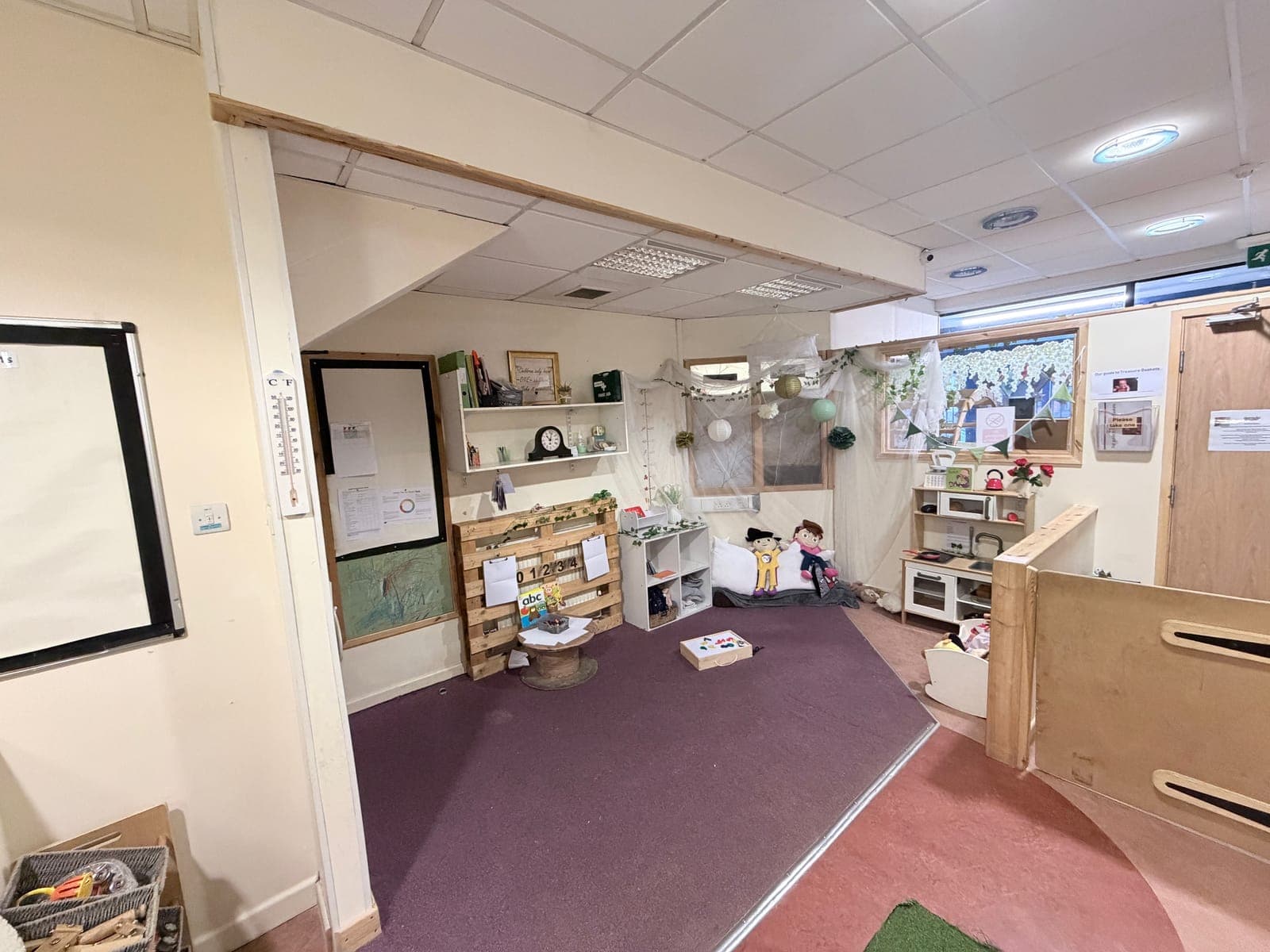
Crawling Caterpillars (1 to 2 years): as children become mobile, we use heuristic play and treasure basket exploration. A treasure basket is filled with everyday and natural objects of different weights, textures and sounds, and children explore them freely at their own pace. It is simple, and it holds a toddler's attention far longer than you might expect.
Ladybird Room (2 to 3 years): at this stage, children learn best through exploration and hands-on experiences, so sensory play becomes messier and more ambitious. Our play-based activities support communication and language, physical development, and personal, social and emotional growth.
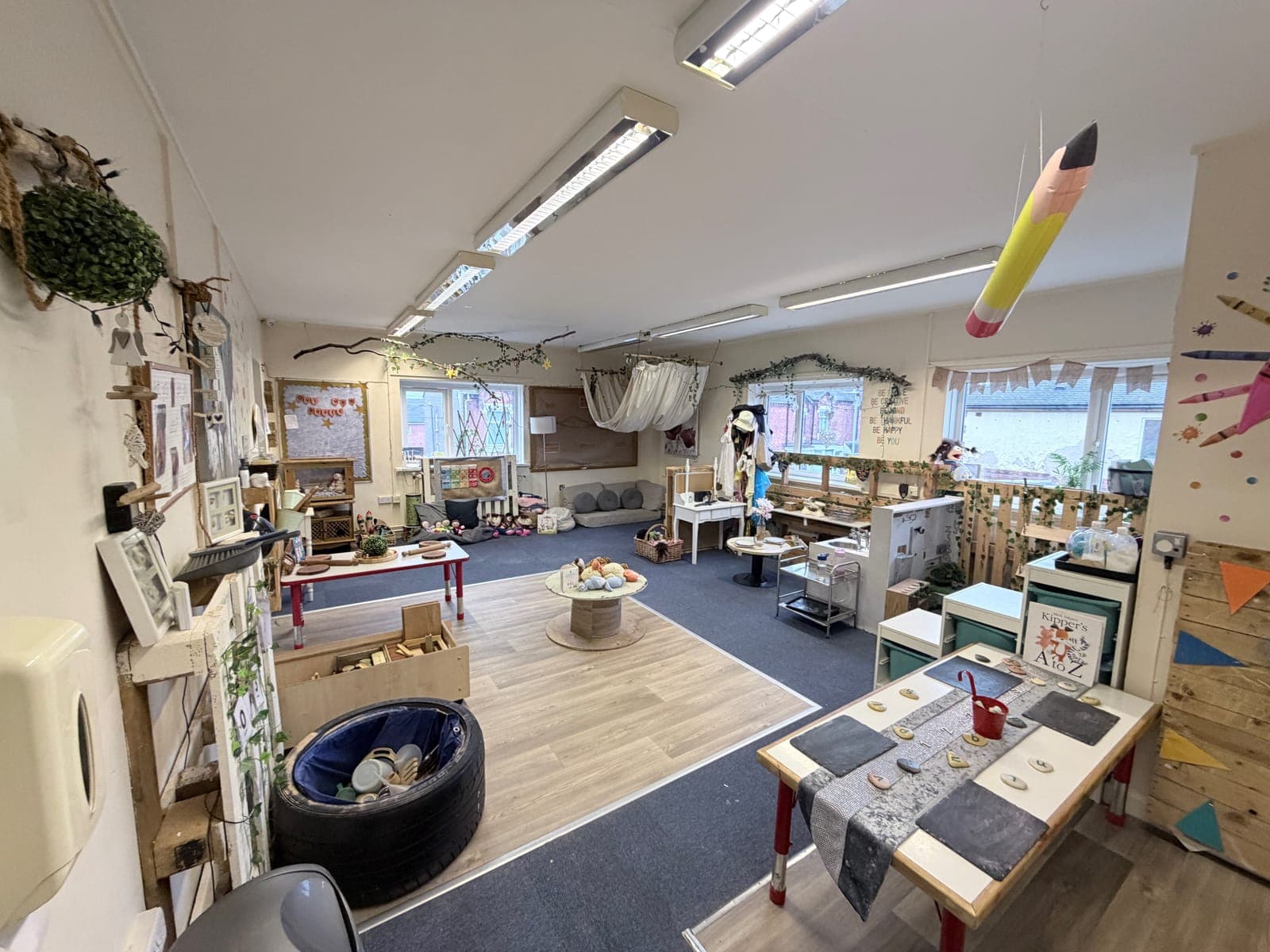
Pre-School Room (3 years and over): our pre-school embraces the Curiosity Approach, with natural, open-ended resources that children can use in endless ways. Playdough is a firm favourite, and outdoors the mud kitchen and mark-making areas keep hands busy. Read more in our guide to pre-school at Busy Bugs.
Our sensory room
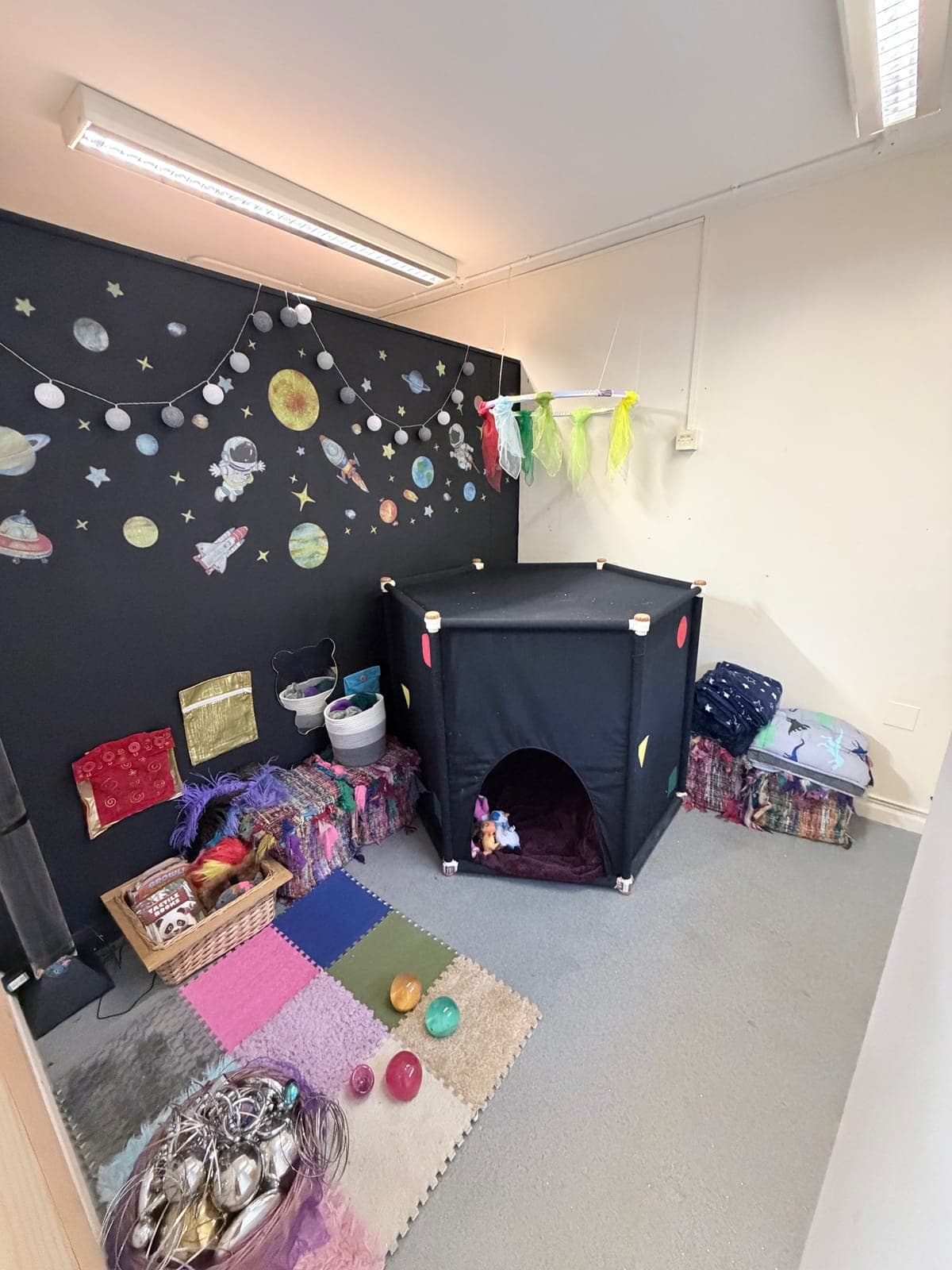
We are proud to have our very own dedicated sensory room. It is a calm, nurturing space that children can use one to one or in small groups, depending on what each child needs.
The room helps children with their emotional wellbeing, giving them a safe and structured place to regulate their feelings. Using carefully selected sensory resources, children can calm their bodies, refocus their attention and build self-regulation skills. That, in turn, helps them feel settled and secure, and ready to get the most out of the rest of their day.
Children in our nurture rooms have access to the sensory room.
Sensory play outdoors
Our Nurture Garden was designed with sensory development in mind. It includes:
- A sensory wall for tactile exploration and sensory regulation
- A play kitchen for imaginative and cooperative play
- A play house for role play, communication and social interaction
- Open-ended resources to inspire creativity and problem-solving
- Space to move, for physical development and gross motor skills
Outdoor play is an essential part of our provision. Fresh air, changing weather and natural materials offer sensory experiences no indoor room can fully match, and the garden lets children learn through hands-on experiences in a calm, supportive space.
Sensory play and additional needs
Busy Bugs is a specialist nursery, and many of our children have additional needs. Every child responds to sensory experiences differently. Some seek out noise, movement and messy textures. Others find the same things overwhelming and need a quieter, more predictable space.
That is why we pay close attention to each child and adapt what we offer. A calm, structured environment, access to the sensory room and a team who know each child well all help. You can read more about our approach, or our guide to settling into nursery with additional needs.
Simple sensory play ideas for home
You do not need special equipment to bring sensory play home. A few easy ideas:
- Water play: A washing-up bowl, a few cups and a sponge will keep most toddlers busy.
- A homemade treasure basket: Collect safe everyday objects with different textures, such as a wooden spoon, a soft scarf and a pine cone.
- A texture walk: Walk barefoot on grass, sand or a soft rug and talk about how each feels.
- Autumn leaves: Crunch them, sort them by colour and compare their shapes.
- Kitchen music: Pans, lids and wooden spoons make a very effective (and loud) band.
Always stay with your child during sensory play, and keep small objects that could be a choking hazard out of reach of babies and toddlers.
Come and see for yourself
The best way to understand how we use sensory play is to see it. Busy Bugs Nursery is at Bedford House, Havelock Place, Stoke-on-Trent, ST1 4PR. Get in touch to arrange a visit, and we will show you our rooms, our sensory room and our Nurture Garden.
Frequently asked questions
What is sensory play?
Sensory play is any activity that encourages a child to explore using their senses, such as touching different textures, listening to sounds or watching light and colour. It includes simple things like water play, playdough and exploring natural materials.
At what age can children start sensory play?
From the very beginning. Sensory exploration is part of the day in our Baby Room, which cares for children from 4 weeks old.
Is messy play the same as sensory play?
Messy play is one type of sensory play. Sensory play also includes calmer activities, such as listening to sounds, exploring lights or spending time in a quiet sensory space.
Does Busy Bugs have a sensory room?
Yes. We have a dedicated sensory room, which children can use one to one or in small groups depending on their needs.
Interested in Busy Bugs?
Come and see us in person. We love showing families around the nursery.
Get in Touch