SEN-trained staff: what to ask when you visit a nursery
What SEN training actually means in an early years setting, the questions worth asking on a nursery visit, and how our team at Busy Bugs is trained.
Almost every nursery will tell you it is inclusive. Very few parents know what to ask next.
That is not a criticism of parents. 'Inclusive' is a word, and on a first visit, with a toddler on your hip and ten minutes of someone's time, it is hard to know which questions separate a setting that genuinely has the training from one that means well. This guide is about those questions, what good answers sound like, and what the training behind them actually is.
Why staff training is the thing to ask about
Rooms are easy to see on a visit. Training is not, and training is what decides how your child's day actually goes.
A sensory room is only as useful as the person who knows when a child needs it and when they do not. A low-ratio room only helps if the adults in it can read what a child is telling them before it becomes distress. The physical things are worth looking at, but they are the easy half. What you are really trying to find out is whether the people have been taught to notice.
The questions worth asking
Six questions will tell you most of what you need to know.
- **Who is your SENCO, and how many do you have?** The special educational needs coordinator is the person who holds the strategy for a child's support. Ask whether you can meet them, and whether there is more than one.
- **What SEN training have all staff done, not just the SENCO?** This is the question that separates settings. A trained SENCO and an untrained room team means your child's day depends on one person being available.
- **Who do I talk to when something is not working?** Ask whether there is someone whose job is the family rather than the child, because the two are not the same thing.
- **How do you spot a need before there is a diagnosis?** Most children in early years do not arrive with a diagnosis. What matters is whether the setting can see something and act on it.
- **What are your ratios in the rooms where my child would be?** Ask specifically about the room your child would actually be in.
- **What happens at transition?** Moving room, and eventually moving to school, is where support most often gets dropped.
You do not need all six. Asking two or three properly and listening to how specific the answers are will usually tell you everything.
How our team is trained
Taking those questions in turn, here is where Busy Bugs stands, so you have something concrete to compare against.
We have two qualified SENCOs rather than one, which means the person who holds your child's plan is available rather than in a meeting somewhere. We also have a dedicated SEN family support officer, whose job is the family rather than only the child, and an SEN Lead across the setting.
On whole-team training, all of our staff have completed the Dingley's Promise training. That is the answer to the question about everyone rather than just the SENCO, and it is the one we would want a parent to ask us. Members of the team have also completed PANCo training, Physical Activity and Nutrition Coordinator training, which helps us make sure good-quality physical activity runs through the day properly rather than by accident.
Altogether that is over 20 qualified staff across 7 purpose-built rooms, including 3 dedicated nurture rooms with specialist staff and lower ratios. You can read more about how all of this works day to day on our approach page.
On diagnosis, and not waiting for one
One thing worth saying clearly, because it is the worry we hear most often. You do not need a formal diagnosis for us to support your child. Our SEN Lead and our qualified SEN staff observe and identify needs early, and we make relevant adjustments from what we see rather than waiting for a piece of paper. Many families come to us partway through that process, and some come before it has started at all.
If you want to understand how the formal side works when it does start, we have written separately about SEN support and EHCPs, and about speech and language delay and when to seek help.
Where the nurture rooms fit
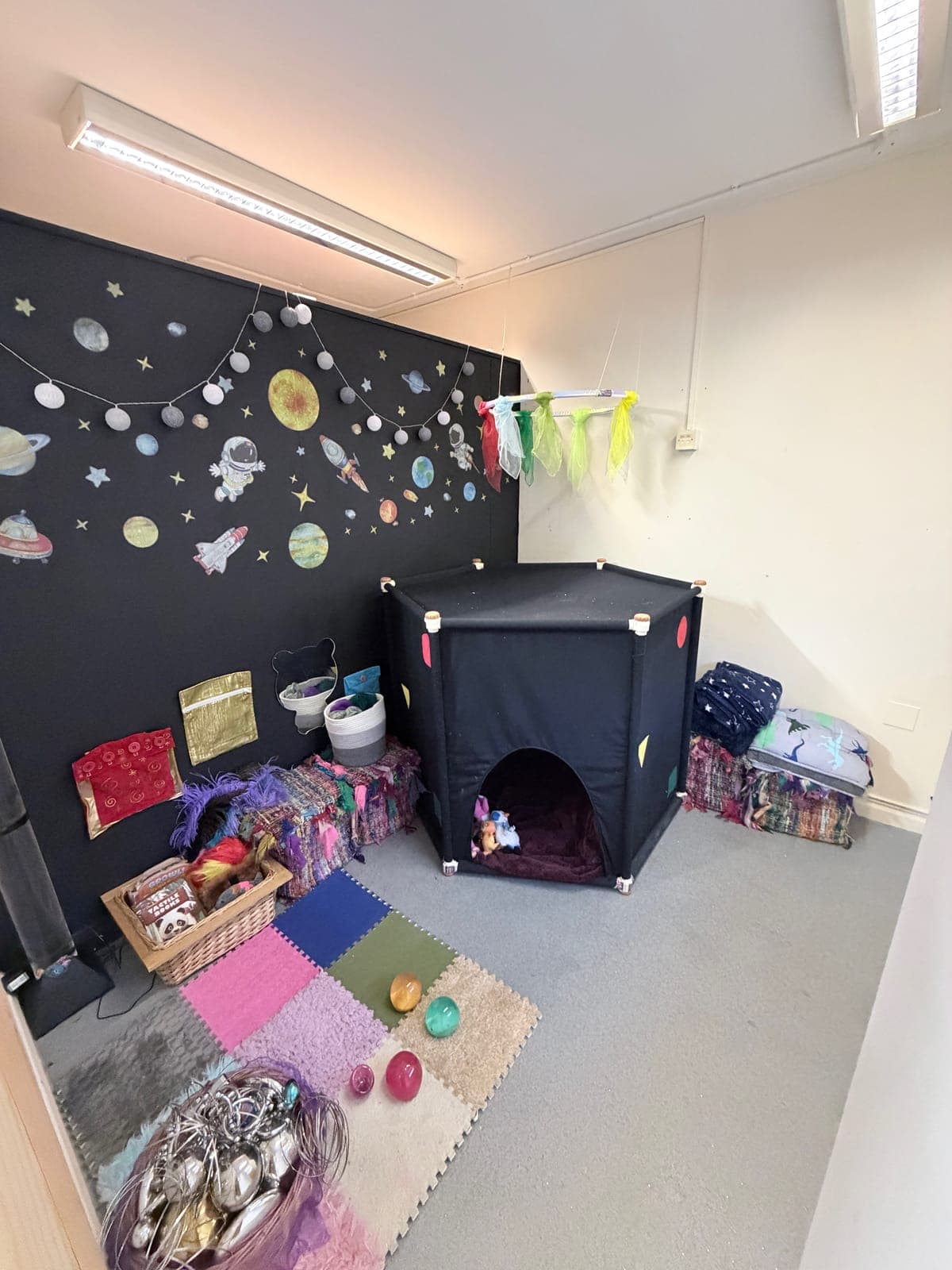
Our three nurture rooms are the part of the setting most directly shaped by the training. They run with specialist staff and lower ratios, which gives children who need more time, or less noise, somewhere to have it without being removed from nursery life.
You can see one of them on our nurture room page. It is worth looking at alongside the rest of the rooms, because the point is not that there is a separate space for SEN children. The point is that a child can move between the two during the day depending on what kind of day it is.
What to do with the answers
Visit more than one setting, ask the same two or three questions at each, and pay attention to how specific the answers are rather than how warm they are. A setting that can name its SENCOs, say what training the whole team has done, and tell you who you talk to when something goes wrong is telling you something real.
Our Ofsted information is on our Ofsted page if you want to read the formal picture alongside the visit. If you would like to come and ask these questions in person, get in touch and we will arrange a time when you can talk to the people who would actually be in the room with your child.
Frequently asked questions
What SEN training have Busy Bugs staff completed?
All of our staff have completed the Dingley's Promise training. We have 2 qualified SENCOs, a dedicated SEN family support officer and an SEN Lead, and members of the team have also completed PANCo training, which covers physical activity and nutrition.
Does my child need a diagnosis before starting?
No. You do not need a formal diagnosis. Our SEN Lead and our qualified SEN staff observe and identify needs early, and we make relevant adjustments from what we see rather than waiting for a diagnosis.
How many SENCOs does the nursery have?
Two qualified SENCOs, plus a dedicated SEN family support officer and an SEN Lead across the setting.
What should I ask a nursery about SEN support?
Ask who the SENCO is and how many there are, what SEN training all staff have done rather than just the SENCO, who you speak to when something is not working, how needs are spotted before a diagnosis, the ratio in the specific room your child would be in, and what happens at transition.
Interested in Busy Bugs?
Come and see us in person. We love showing families around the nursery.
Get in Touch