Bonfire Night and sensory needs: helping your child through fireworks season
Fireworks can be hard for children with sensory needs. Practical, gentle ways to help your child through Bonfire Night, from a Stoke-on-Trent SEN nursery.
For a lot of children, Bonfire Night is one of the most exciting evenings of the year. For others, it is one of the hardest. Sudden bangs, flashes of light, the smell of smoke, crowds and a late night all arrive at once, and in many neighbourhoods the fireworks start well before 5 November and carry on after it.
If your child has sensory processing differences, with or without a diagnosis, you may already know that the next few weeks can be difficult. This guide pulls together some practical, gentle ideas that families find helpful. Every child is different, so take what fits your child and leave the rest.
Why fireworks can be hard for children with sensory differences
The National Autistic Society describes sensory processing differences as experiencing input from the senses differently to other people. For someone who is over-sensitive to sound, it explains, sounds may seem much louder, and sudden noises may be more distressing. Bright lights can be overwhelming too.
Fireworks are close to the worst combination for a child like that: loud, sudden, unpredictable and bright, often in the dark and often when they are tired. A child does not need a diagnosis to find fireworks frightening, either. A child who covers their ears or wants to go inside is telling you something useful, not being difficult.
Some children are the opposite, and seek out noise and excitement. They may need a different kind of help, mostly around staying a safe distance from the bonfire and the fireworks.
Planning ahead makes fireworks season more predictable
Uncertainty is often harder than the noise itself. The National Autistic Society's Bonfire Night and fireworks tips start with sticking to a plan, so everyone knows what to expect, including what the fireworks will look and sound like and when they are likely to go off. Writing the plan down or making a simple visual story can help.
For a young child, that can be as simple as:
- A few pictures of fireworks, a bonfire and your front door, talked through over several days
- A short, calm explanation that fireworks are loud, that they stop, and that home is safe
- A countdown on the calendar, so the night itself is not a surprise
- A clear answer to "what happens if I do not like it?", such as going inside or putting the headphones on
Reducing firework noise and light at home
Most families spend Bonfire Night at home, and there is a lot you can do to soften it there. The National Autistic Society suggests ear defenders or noise-cancelling headphones, and using a familiar TV programme, music or game to mask the noise and the flashing lights.
Other ideas that families often find help:
- Close the curtains before it gets dark, so the flashes are hidden as well as the bangs muffled
- Make a cosy den in the quietest room in the house, with a favourite blanket or toy
- Try ear defenders on calm days first, so they are familiar rather than another new thing on a stressful night
- Keep the evening routine, bath and bedtime as close to normal as you can
The same guidance points to familiar food and drink and to comfort items, such as a favourite toy, as ways of keeping things calm. Hot chocolate gets a mention, which most children will happily agree with.
Choosing between a firework display and watching from home
There is no rule that says your child has to go to a display. The National Autistic Society notes that you can watch a firework display online instead of going outside, and that offering a separate place to go is fine for anyone who would rather not take part.
If you do go out, stay near the edge where it is easier to leave, and agree in advance what the signal is for going home. Safety matters as much as comfort. RoSPA's firework safety advice says children should be supervised and should watch from a safe distance, that sparklers should not be given to children under five, and that you should never hold a baby or young child while using a sparkler.
Helping your child settle after Bonfire Night
A late night or a frightening evening can echo into the next day. Your child may be tired, more sensitive than usual, or unsettled at drop-off. That is completely normal, and it helps the people who care for your child to know about it.
If you are a Busy Bugs parent, tell us at the door if it has been a rough night. We would far rather know, so the day can start gently.
How we support sensory needs at Busy Bugs
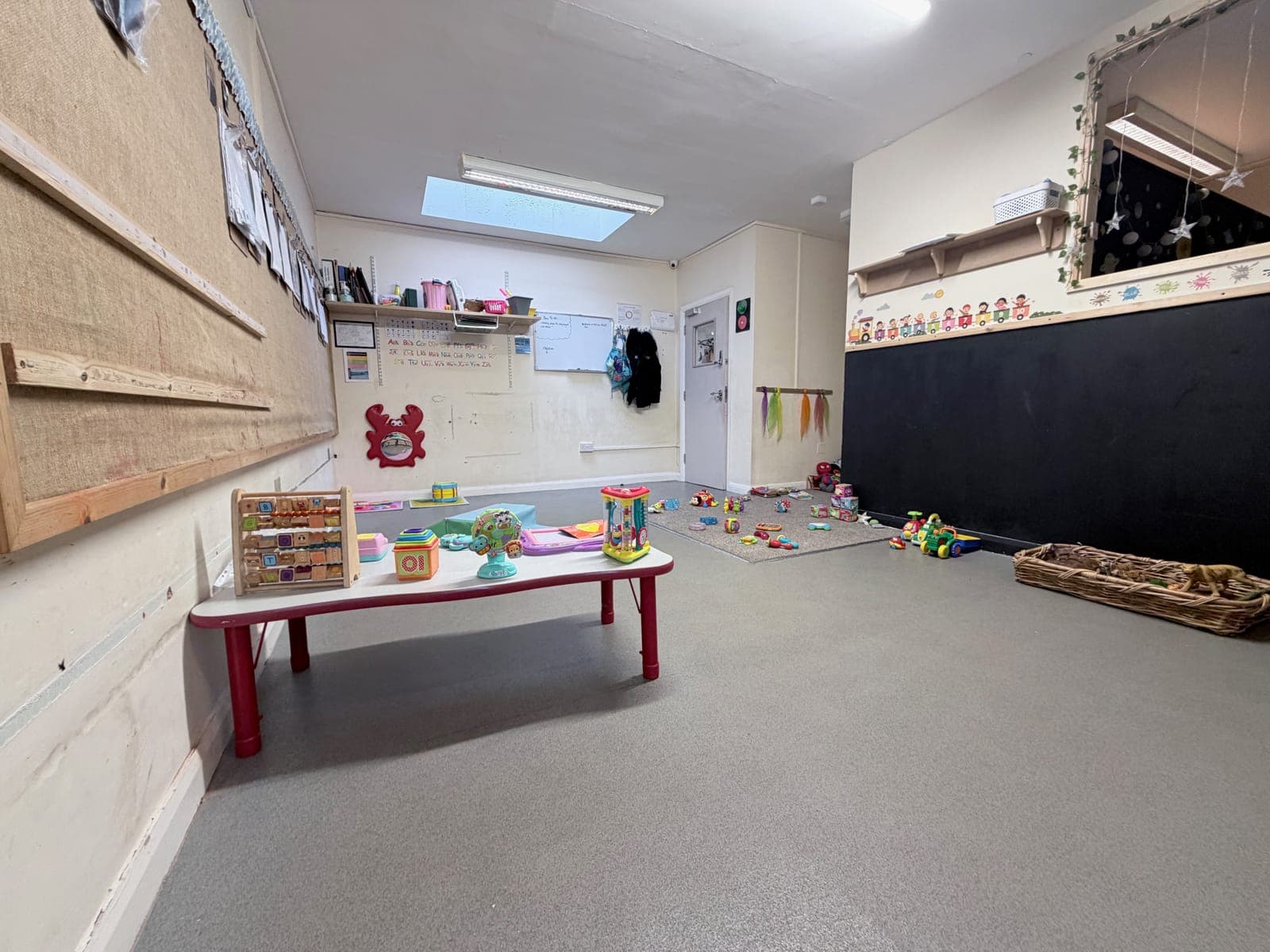
Sensory needs are part of everyday life at our nursery in Shelton, not something we think about once a year. Our rooms are designed to feel home-like rather than institutional, with natural materials, soft lighting and spaces to retreat to when a child is overwhelmed. You can read more about this in our approach.
Our three nurture rooms provide different levels of support for children with additional needs, with lower ratios and staff trained to understand sensory needs, communication differences and behavioural support. Nurture Room 1 is a calm, structured room, free from unnecessary distractions, and children there can use our dedicated sensory room one to one or in small groups. The sensory room is designed to help children regulate their feelings in a safe and structured space, calm their bodies and refocus their attention.
You do not need a formal diagnosis for us to support your child. We have written more about sensory play at nursery, and about settling into nursery with additional needs if your child is starting soon.
Visiting our SEN nursery in Stoke-on-Trent
If fireworks season is a worry this year, you are not the only family feeling it. If you would like to see how we support children with sensory needs, our nursery is at Bedford House, Havelock Place, Stoke-on-Trent, ST1 4PR. Get in touch to arrange a visit.
Interested in Busy Bugs?
Come and see us in person. We love showing families around the nursery.
Get in Touch