Speech and language delay: when to seek help
Most children find their own pace with talking, but some need a nudge. The early-years milestones worth knowing and when to ask for help in Stoke.
Talking is the thing parents compare most, and it is the thing that worries them most. Someone at the baby group has a two year old holding conversations, yours has a handful of words, and the advice you get ranges from "he will get there in his own time" to "you should have been referred by now". Both cannot be right.
Speech, language and communication need is the most commonly identified type of additional need in the early years in England. It is also one of the most responsive to early support, which is why it is worth knowing what the rough guides look like and what actually warrants a phone call.
The range of normal is genuinely wide
Before the milestones, the caveat that matters. Children do not develop language on a timetable. There are children who say very little until close to their third birthday and then arrive in full sentences, and there is nothing wrong with them. Two siblings raised identically in the same house can be a year apart.
So the milestones below are guides, not tests. What matters more than hitting any single one is the overall direction of travel: is your child steadily adding to what they can do, and are they trying to communicate with you in some way, even if not with words?
Rough guides for the early years
- Around 12 months: babbling with real intonation, responding to their own name, using gestures like pointing and waving, and often a first word or two.
- Around 18 months: somewhere in the region of ten to twenty words, following a simple instruction, and pointing at things to show you rather than just to request them.
- Around 2 years: roughly fifty words and starting to put two together, such as "more juice" or "daddy car".
- Around 2 and a half to 3 years: short sentences, and being understood most of the time by adults who know them well.
- Around 3 to 4 years: longer sentences, endless questions, and being largely understood by people outside the family.
Understanding usually runs ahead of speaking, and that gap is normal. A child who follows what you say but says little themselves is in a very different position from a child who does neither.
The signs worth acting on now
Some things are worth a conversation with a professional rather than another few months of waiting:
- No babbling at all by around 12 months.
- No words by around 18 months.
- Not putting two words together by around two and a half.
- Losing skills they previously had. A child who used to say words and has stopped should always be seen, and quickly.
- Not responding to their name, or seeming not to hear you consistently.
- Very little eye contact, pointing or gesture, especially alongside limited speech.
- Speech that even you struggle to understand by around three.
- Your own instinct that something is off, even if you cannot name what.
That last one carries real weight. Parents are usually right that something is different, even when they are wrong about what it is.
Get hearing checked first
This is the step that gets skipped, and it should be first every time. Glue ear, where fluid sits behind the eardrum, is extremely common in the under-fives and it muffles everything a child hears. It often follows colds and ear infections, and it can come and go, which is exactly why it goes unnoticed.
A child who is hearing the world through a layer of water will be slow to talk, and no amount of language input fixes that until the hearing does. Ask your GP or health visitor for a hearing check before you go any further down the speech route.
Two languages at home is not the cause
Worth saying clearly because families are still told otherwise. Growing up with more than one language does not cause speech delay. Bilingual children may divide their words across both languages early on, so a count in English alone looks lower than it really is, but they reach the same place.
If your child is delayed, being bilingual is not the reason, and the answer is never to drop your home language. Children need rich language from the people who love them, and that works best in the language you are most fluent and natural in.
Waiting and seeing costs more than it saves
The honest position is that "wait and see" is sometimes right and often expensive. Language underpins almost everything that follows it, including reading, behaviour, friendships and how a child copes with school. A delay that is picked up at two and supported straight away is a far smaller piece of work than the same delay met at four and a half.
You also do not need a diagnosis, a label or anyone's permission to get support started. Most early-years help happens through SEN Support at setting level, which begins as soon as someone notices, not when paperwork arrives.
Getting help in Stoke-on-Trent
There are a few routes and they run in parallel rather than in order:
- Your health visitor. The review most children have between two and two and a half is a natural point to raise it, but you do not have to wait for it. You can ring the health visiting team any time.
- Your GP, particularly for the hearing check.
- Speech and language therapy. Some services accept a referral direct from parents and others want it through a health visitor, GP or nursery, so it is worth asking your local service which applies before you queue for the wrong one.
- Your child's nursery. Any setting should be able to start support straight away and contribute to a referral.
- The council's SEND Local Offer. Every council has to publish one, and Stoke-on-Trent's lists the early-years and speech and language services available across the city.
Do more than one of these at once. Waiting lists are real, and there is no benefit in holding off on nursery-level support while you wait for an appointment.
What good nursery support looks like
Support for speech and language should be woven into an ordinary day rather than parked in a weekly session. In practice that looks like adults who get down to the child's level and wait, who comment on what a child is doing instead of quizzing them, and who model the next step up rather than correcting.
If a child says "car", the useful reply is "big car", not "say big car". Children learn language from hearing it used well, not from being tested on it.
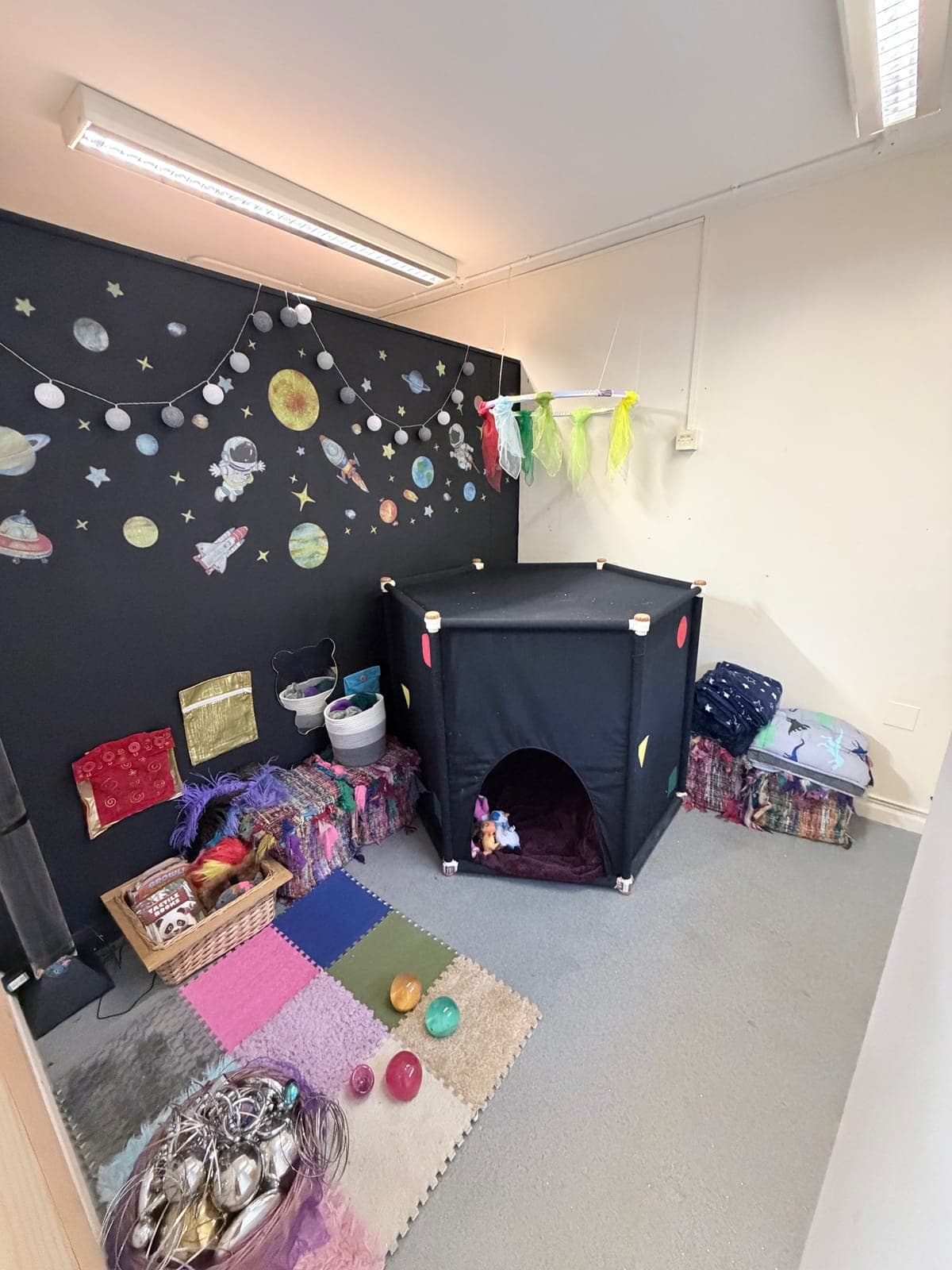
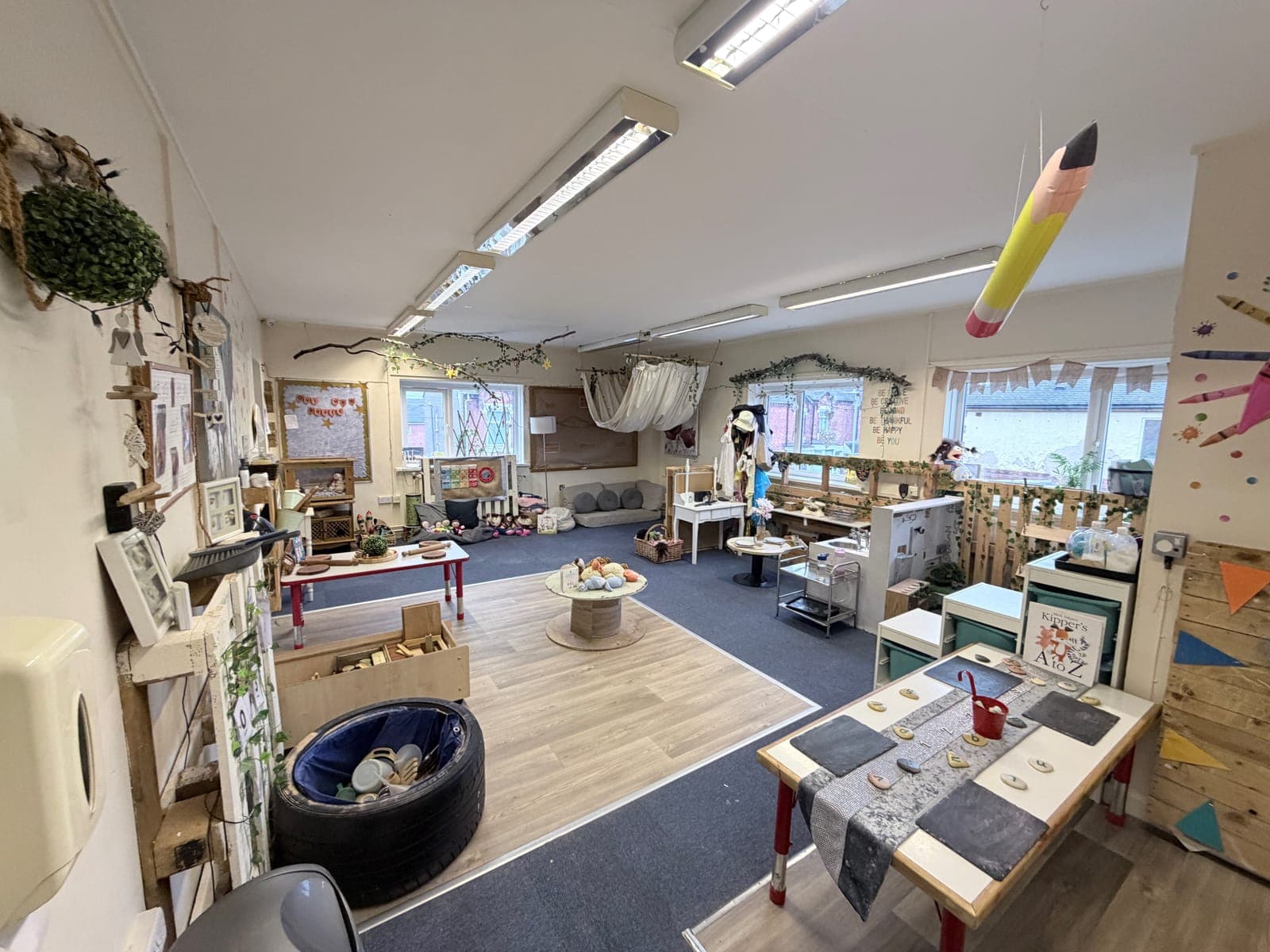
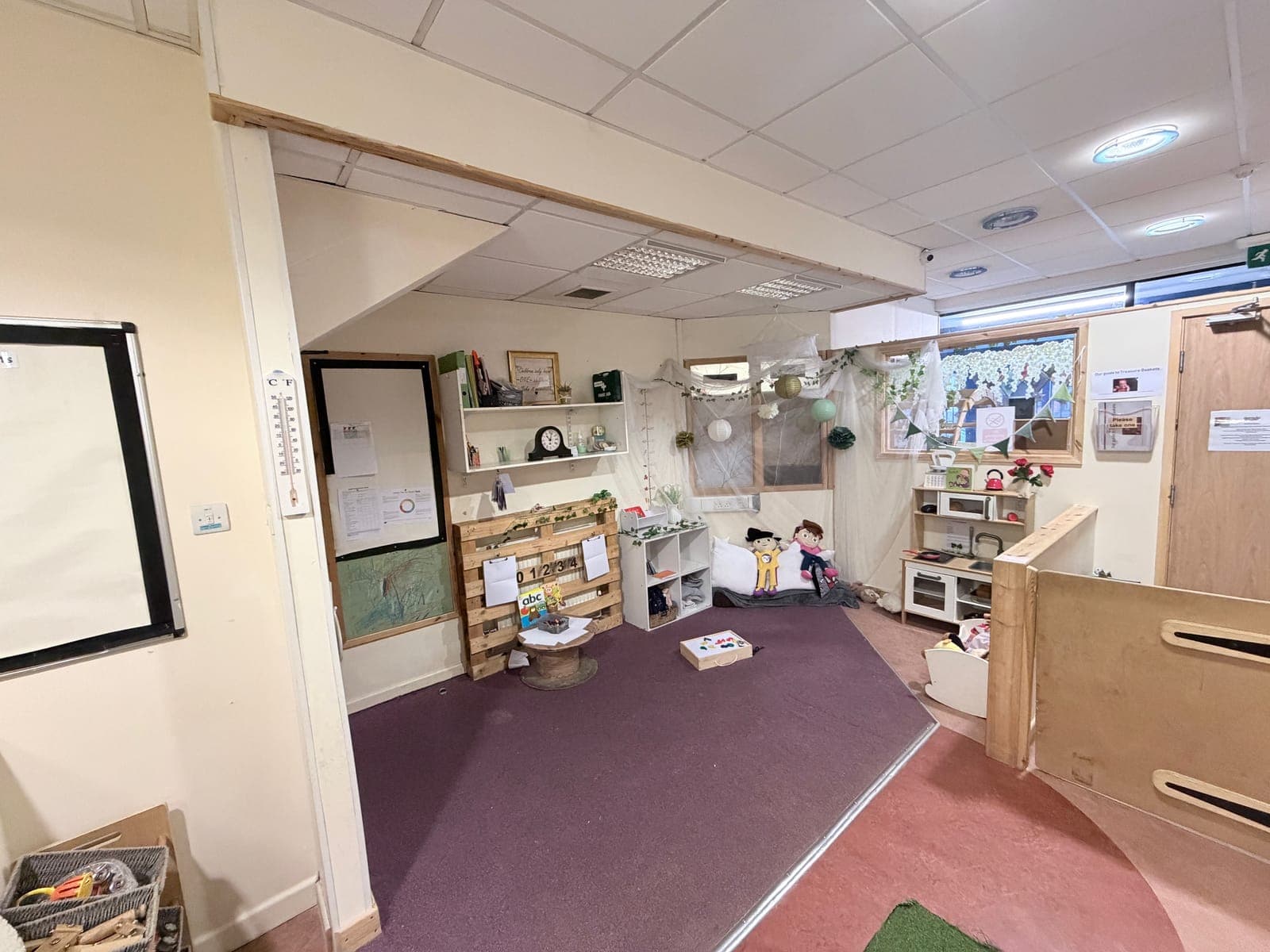
In our nurture rooms the ratios are lower than in our main rooms, which is what makes that kind of unhurried, one-to-one interaction possible all day rather than in occasional bursts. Our sensory room also gives children who find the main rooms loud somewhere calm to communicate from, because a child who is overwhelmed is not a child who is talking.
What you can do at home this week
None of this requires resources or a programme:
- Narrate what you are both doing, out loud, as you do it. Getting dressed, making tea, walking to the shop.
- Cut down the questions. Comment instead. Questions put a child on the spot, comments give them words for free.
- Leave a gap. Count to ten in your head after you say something. Children who are slow to find words need longer than adults naturally give them.
- Get face to face and down at their level so they can see your mouth.
- Add one word to whatever they say, rather than correcting it.
- Read the same books over and over. Repetition is doing the work even when it bores you rigid.
- Turn the background telly off during play. Competing noise makes it much harder to pick out speech.
Come and talk to us
If you are worried about your child's talking, you do not need to have it worked out before you get in touch. We support children with speech, language and communication needs every day across our three nurture rooms, our sensory room and our nurture garden.
Get in touch to arrange a visit, or read more about how we work and choosing a nursery in Stoke-on-Trent if you are still deciding where to start.
Frequently asked questions
How many words should my two year old have?
Roughly fifty words and the beginnings of two-word phrases is the usual guide at around two, but the normal range is wide. What matters more than the exact count is whether your child is steadily adding new words and trying to communicate with you in some way, including through pointing and gesture. If there are no words at all by around eighteen months, or no two-word combinations by two and a half, it is worth asking for advice.
Does my child need a diagnosis before nursery can help?
No. Speech and language support in the early years is provided through SEN Support at setting level, which starts as soon as a need is noticed. It does not require a diagnosis, a formal assessment or an EHCP. If a setting tells you it cannot do anything without a diagnosis, that is not how early-years support is meant to work.
Can I refer my child for speech and language therapy myself?
In many areas parents can refer directly, and in others the referral needs to come through a health visitor, GP or nursery. Check what your local service accepts before you send anything, so you are not waiting in the wrong queue. Whichever route applies, ask for a hearing check at the same time, because glue ear is a very common and easily missed cause of delayed speech.
Will speaking two languages at home delay my child?
No. Growing up bilingual does not cause speech delay. Bilingual children often spread their early words across both languages, so counting in English alone can make their vocabulary look smaller than it is, but they reach the same milestones. Dropping your home language is not the answer and usually makes things harder, because children need rich, natural language from the people closest to them.
Interested in Busy Bugs?
Come and see us in person. We love showing families around the nursery.
Get in Touch